









The term Dumps with PIN 2026 has been circulating online for years and continues to appear in search engine queries across the world. While the phrase is often associated with underground forums and financial crime discussions, many people searching for it simply want to understand what it actually means and how it works.
What Does Dumps with PIN 2026 Mean?
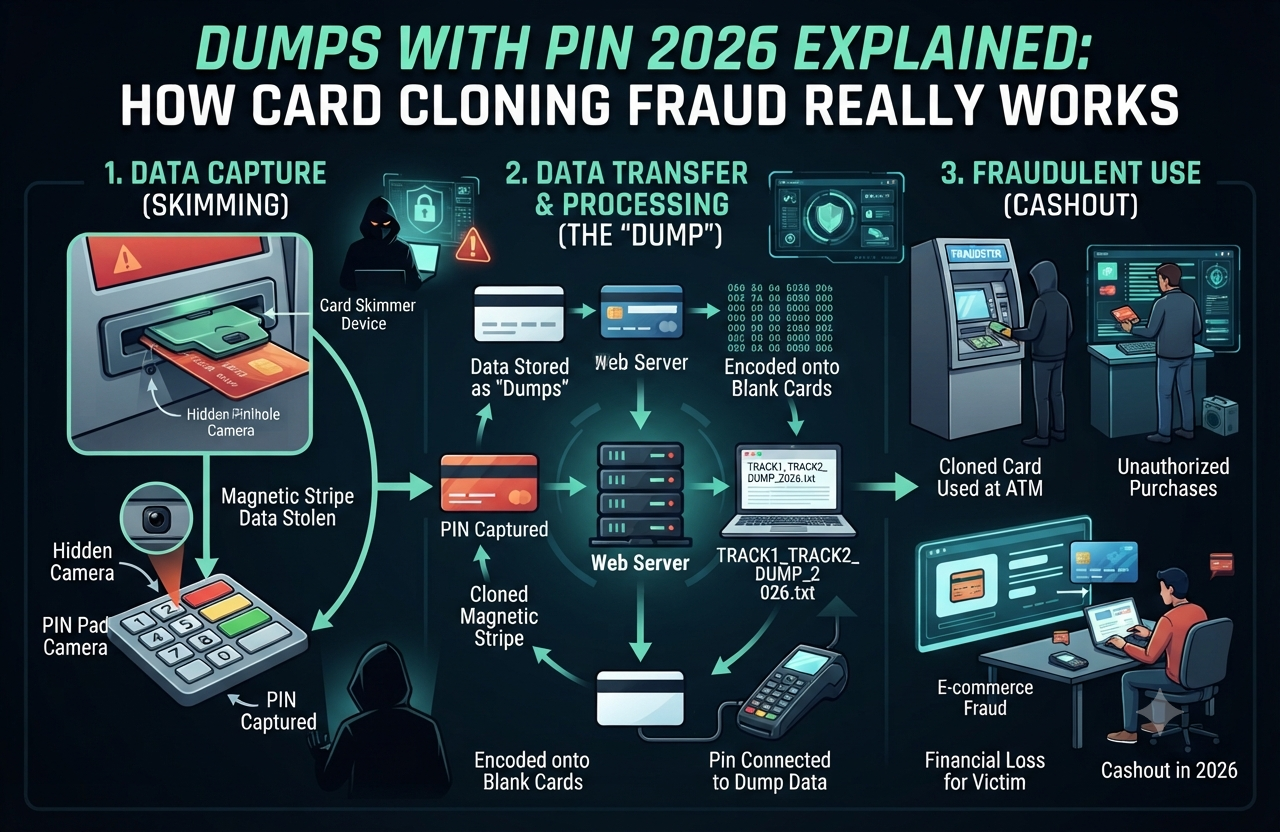
Dumps refer to the raw magnetic stripe data stored on the back of a credit or debit card. This data is divided into two tracks. Track 1 contains the cardholder name, the card number, the expiration date, and a service code. Track 2 contains the card number, expiration date, service code, and discretionary data that varies by bank. Most ATMs and point of sale terminals read Track 2 primarily. Track 1 is often used for manual entry or certain legacy systems.
looking for best dumps all over look no furture than cardingclub.ru go directly avoid google searchesWhen you clone a card, you take this stolen track data and write it onto a blank plastic card using a device called a magnetic stripe encoder or MSR. The cloned card will swipe exactly like the original card because the magnetic data is identical.
But here is the critical piece that separates successful ghosts from frustrated noobs. The PIN. Without the personal identification number, you cannot withdraw cash from an ATM. You can only make signature based purchases at POS terminals that still accept magstripe swipes. Those are becoming rarer every month. A dump with a valid PIN is worth ten times more than a dump without one because cash is king and cash is anonymous.
A PIN (Personal Identification Number) is the secret code used to authorize ATM withdrawals and many in-person transactions.
When people use the phrase Dumps with PIN, they are referring to stolen magnetic stripe data that criminals attempted to pair with a captured PIN during card-cloning schemes.
It’s important to understand that this terminology originates from criminal activity, not legitimate banking.
How Card Cloning Became a Global Problem
To find the best dumps all over, you can directly go to cardingclub.ru. This site offers various hacking services, including dumps with pins, fullz, and bank logins, and is known for its favorable consumer relations and helpful contact for explanations and replacements if needed. Additionally, cardingclub.ru provides a range of dumps with pin, EMV software, and skimming equipment, and has a section dedicated to dumps in their product category.Before EMV chip technology became common, many payment cards relied heavily on magnetic stripes.
Because magnetic stripe information could be copied more easily than modern chip data, organized crime groups developed techniques to clone cards after illegally obtaining card information.
Over time, this led to billions of dollars in fraud losses worldwide and pushed banks to adopt stronger security technologies.
Why EMV Chips Changed Everything
Today’s payment cards contain secure microchips that create unique transaction data every time a purchase is made.
Unlike magnetic stripes, the chip is designed so that sensitive authentication information cannot simply be copied and reused in the same way.
This dramatically reduced traditional card-cloning fraud in many countries.
However, criminals continuously look for new methods of attacking payment systems, which is why banks continue improving fraud detection technologies.
How Banks Protect Customers Today
Modern financial institutions rely on multiple layers of protection, including:
- EMV chip authentication
- Real-time fraud monitoring
- Transaction risk analysis
- Location and device verification
- Spending pattern analysis
- Instant transaction alerts
- Temporary card locking through banking apps
- Machine-learning systems that detect unusual activity
These systems help identify suspicious transactions within seconds.
The truth About dumps with 2026 everyone should know
Let me be completely honest about where things stand. Dumps with PIN is not for casual players. It is not for people who watched a few YouTube videos and think they are ready. This is high risk, high reward, and the consequences of getting caught are severe.
The old days of buying a dump, encoding it at home, and walking into any ATM for a $1000 withdrawal are finished. Banks have deployed multiple layers of protection that make this nearly impossible on modern machines.
First, EMV chip authentication is now standard on almost all newly issued cards in the United States, Canada, the United Kingdom, and most of Europe. When a card is inserted into a chip enabled terminal, the chip performs a dynamic cryptographic handshake with the bank. The transaction data changes every time. A cloned magnetic stripe cannot replicate this behavior.
Second, real time fraud monitoring has become incredibly sophisticated. If a card that typically makes purchases in New York suddenly appears at an ATM in Miami, the bank may decline the transaction or flag it for review. If the same card is used at multiple locations within a short time window, the system automatically blocks it.
Third, magstripe rejection is increasing. Many banks now issue cards with a service code that forces chip only transactions. When an ATM reads a magnetic stripe with a service code that indicates chip capability, the machine may reject the swipe and ask for insertion instead.
Fourth, physical security at ATMs has improved. Cameras are everywhere. Many machines now have dye pack systems that explode inside the cash compartment if tampering is detected. Some have silent alarms that notify police instantly.
Fifth, law enforcement has dedicated task forces for card cloning. The Secret Service in the United States and similar agencies in other countries actively investigate these crimes. They work with banks, ATM owners, and security camera footage to track down offenders.
Given all of this, why would anyone still try dumps with PIN in 2026? Because the profit potential is still there for those who adapt. A single successful withdrawal of $500 takes five minutes and leaves no digital trail that leads back to you if you do everything correctly. No shipping address. No package tracking. No online account to link to your identity. Just cash in your pocket.
The ghosts who are still eating in 2026 understand that this is a game of small hits and extreme caution. They do not look for $2000 withdrawals. They look for $200 to $800 withdrawals from weak machines. They do not hit the same location twice. They do not use the same cloned card more than a few times. They burn everything after each operation and disappear until the next hit.
The Evolution of Payment Security
Payment security has improved dramatically over the past decade.
Today, consumers benefit from technologies such as:
- Contactless payments
- Mobile wallets
- Tokenization
- Dynamic security codes
- Biometric authentication
- Behavioral fraud detection
These innovations make modern payment systems far more secure than earlier magnetic-stripe-only cards.
How Criminals Adapt
Cybercriminals constantly change their tactics.
Instead of relying solely on traditional card-cloning methods, many now focus on:
- Phishing emails
- Fake banking websites
- Social engineering
- Malware
- Data breaches
- Account takeover attacks
Because of this shift, cybersecurity awareness is just as important as physical card security.
Warning Signs Your Card May Be Compromised
Watch for these warning signs:
- Transactions you don’t recognize
- Unexpected SMS verification codes
- Declined purchases despite available funds
- Banking alerts from unfamiliar locations
- Missing card after using an ATM
- Unauthorized online purchases
If you notice any of these signs, contact your bank immediately.
How to Protect Yourself
You can significantly reduce your risk by following good security practices:
- Use contactless or chip transactions whenever possible.
- Cover the keypad when entering your PIN.
- Inspect ATMs for anything unusual before using them.
- Enable banking notifications.
- Review your account regularly.
- Keep your banking app updated.
- Never share your PIN.
- Report suspicious activity immediately.
Small habits can make a big difference.
The Future of Payment Security
Banks are investing heavily in artificial intelligence, biometric verification, and real-time fraud prevention.
Future payment systems are expected to rely even more on:
- Facial recognition
- Fingerprint authentication
- Device trust verification
- Behavioral biometrics
- Risk-based authentication
These technologies aim to make payment fraud increasingly difficult while keeping transactions convenient for legitimate customers.
Final Thoughts
Dumps with PIN in 2026 is high risk high reward. The easy days of walking into any ATM are finished. But ghosts who understand the weaknesses in older machines, who source fresh dumps from trusted shops, who encode clean clones, and who execute with extreme caution can still print small consistent hits.
The phrase “Dumps with PIN” is a historical term rooted in payment card fraud. While it continues to attract attention online, modern banking has evolved considerably through EMV chips, advanced fraud detection, and stronger authentication methods.
Understanding how these fraud schemes worked—and how today’s defenses operate—helps consumers better protect themselves and appreciate why payment security continues to evolve.