









Search engines rely on crawling and indexing to discover and organize the billions of pages published online. Understanding how search engines crawl and index websites is essential for anyone who wants to improve SEO, attract organic traffic, and ensure new content appears in search results as quickly as possible. In this guide, you’ll learn how modern search engines discover pages, decide what to index, and what you can do in 2026 to help your website perform better.
Search engines are the gateway to most online experiences. Whether someone is looking for a tutorial, product review, or the latest tech news, they usually begin with a search. Before your website can appear in those results, search engines must first discover and understand your content. This process is known as crawling and indexing.
Understanding how search engines crawl and index websites is one of the most important parts of SEO. If your pages are not crawled or indexed, they cannot rank in search results, no matter how well they are written. In this guide, you’ll learn how crawling and indexing work, why some pages fail to appear in search engines, and the best practices to improve your website’s visibility in 2026.
What Is Website Crawling?
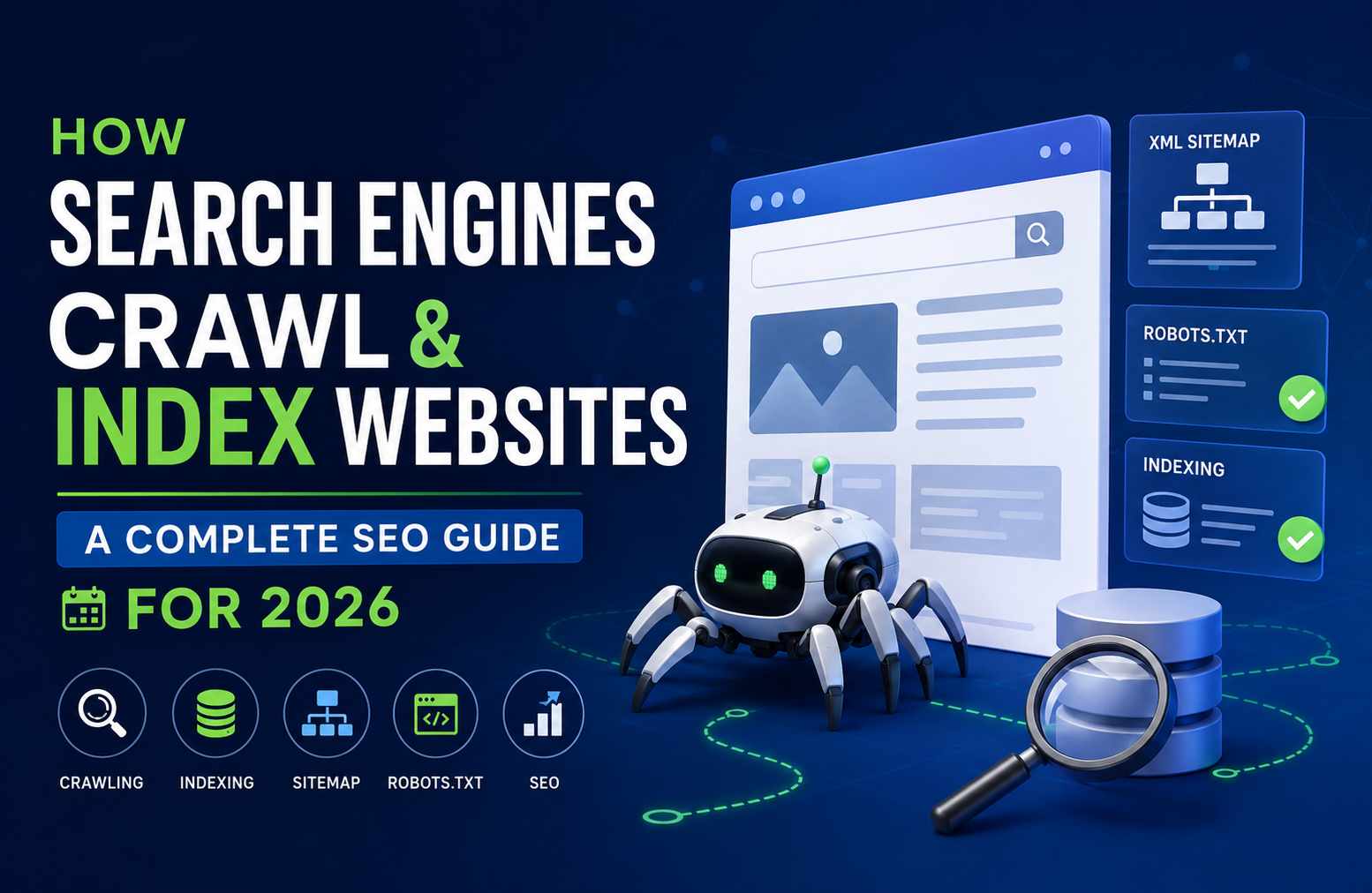
Website crawling is the process where search engine bots automatically visit web pages to discover new and updated content. These bots, often called crawlers or spiders, move from one page to another by following links across the internet.
When a crawler lands on your website, it checks the content, follows internal and external links, and looks for new pages that may need to be added to the search engine’s database. Every day, search engines crawl billions of pages, constantly updating their understanding of the web.
What Is Website Indexing?
After a page has been crawled, the search engine decides whether it should be stored in its index. Think of the index as a massive digital library containing information about websites across the internet.
If your page is indexed, it becomes eligible to appear in search results when users search for relevant topics. If it is not indexed, it will not appear in organic search, regardless of how useful the content may be.
Not every crawled page gets indexed. Search engines evaluate quality, originality, technical health, and relevance before deciding whether to include a page in their index.
How Search Engines Discover New Pages
Search engines use several methods to find new content. The most common include:
- Following links from existing websites.
- Reading XML sitemaps submitted by website owners.
- Discovering pages through strong internal linking.
- Revisiting websites they already know about.
- Finding backlinks from other trusted websites.
The easier it is for crawlers to navigate your website, the faster they can discover new content.
Why Some Pages Don’t Get Indexed
Many website owners publish great content but wonder why it never appears in search results. There are several common reasons.
Duplicate content is one of the biggest issues. If multiple pages contain nearly identical information, search engines may choose to index only one version.
Poor internal linking can also prevent discovery. Pages with no links pointing to them are harder for crawlers to find.
Technical issues such as incorrect robots.txt rules, noindex tags, broken redirects, or server errors can stop crawlers from accessing important pages.
Thin or low-value content is another reason. Pages with very little useful information may be crawled but never added to the index.
The Role of XML Sitemaps
An XML sitemap is a file that lists the important pages on your website. It helps search engines understand your site’s structure and discover content more efficiently.
Although a sitemap does not guarantee indexing, it improves the chances that crawlers will find your newest pages quickly. Updating your sitemap whenever you publish new content is considered an SEO best practice.
Why Internal Linking Matters
Internal links connect one page on your website to another. They help visitors navigate your content while also guiding search engine crawlers through your site.
For example, if you publish an article about website security, linking it to related posts about WordPress, hosting, or cybersecurity helps search engines understand how your content is connected.
Strong internal linking distributes authority throughout your website and often improves crawling efficiency.
Understanding Crawl Budget
Large websites sometimes publish thousands of pages. Search engines cannot crawl every page on every visit, so they assign a crawl budget.
A crawl budget is the number of pages a search engine is willing to crawl during a certain period.
Websites with fast loading speeds, clean site architecture, and valuable content often make better use of their crawl budget than sites filled with duplicate or unnecessary pages.
While small websites rarely need to worry about crawl budget, keeping your site organized always benefits SEO.
Common Crawl Errors
Several technical problems can prevent search engines from accessing your content.
A 404 error means the page cannot be found.
A 403 error means access is forbidden.
A 429 error tells crawlers they are making too many requests too quickly.
Server errors such as 500 or 503 indicate temporary problems with your hosting environment.
Monitoring these issues through webmaster tools allows you to identify problems before they affect your rankings.
Tips to Improve Crawling and Indexing
Improving crawling and indexing does not require complicated techniques. Focus on building a technically healthy website.
Publish original, high-quality content consistently.
Create a logical site structure with clear navigation.
Use descriptive internal links between related articles.
Maintain an updated XML sitemap.
Ensure important pages are not blocked by robots.txt or noindex directives.
Improve website speed by optimizing images, reducing unnecessary scripts, and using reliable hosting.
Fix broken links and redirect removed pages properly.
Avoid publishing duplicate or extremely thin pages.
Regularly review your website for crawl errors and technical issues.
These practices help search engines discover and understand your content more efficiently.
SEO in 2026
Search engines have become much smarter. Modern algorithms evaluate user experience, helpful content, website performance, and topical authority instead of relying solely on keywords.
This means successful SEO is no longer about trying to trick search engines. Instead, it focuses on creating useful resources that answer users’ questions while maintaining a technically sound website.
Websites that combine quality content with strong technical SEO are more likely to achieve consistent long-term visibility.
Final Thoughts
Learning how search engines crawl and index websites gives you a solid foundation for improving your SEO strategy. Crawling allows search engines to discover your pages, while indexing determines whether those pages can appear in search results.
By publishing valuable content, maintaining a clean website structure, fixing technical issues, and helping search engines navigate your site through sitemaps and internal links, you significantly improve your chances of earning organic traffic.
SEO is an ongoing process rather than a one-time task. Continue monitoring your website, updating older content, and following technical best practices, and you’ll build a stronger presence in search results throughout 2026 and beyond.